Principles of cellular behavior


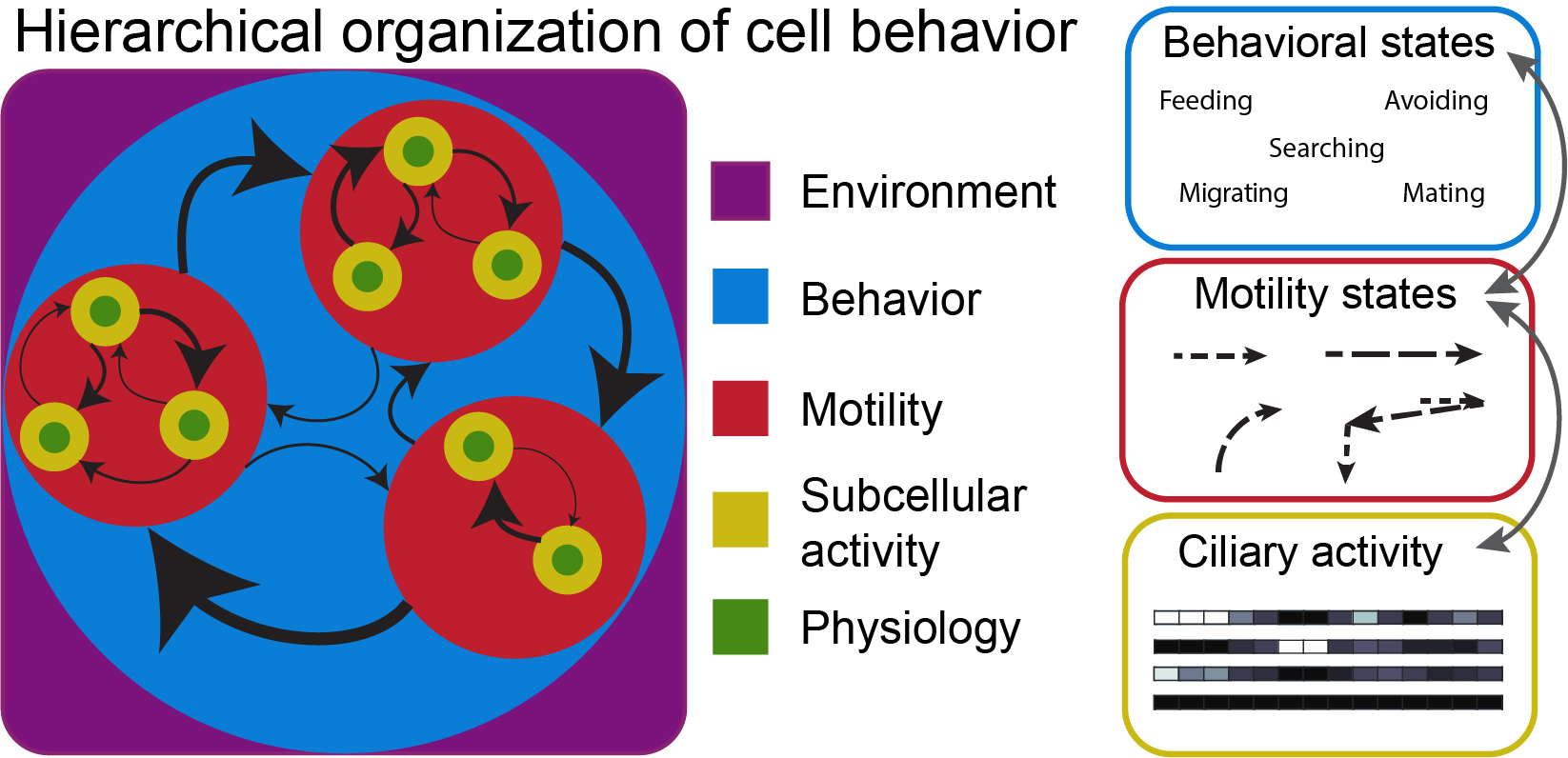
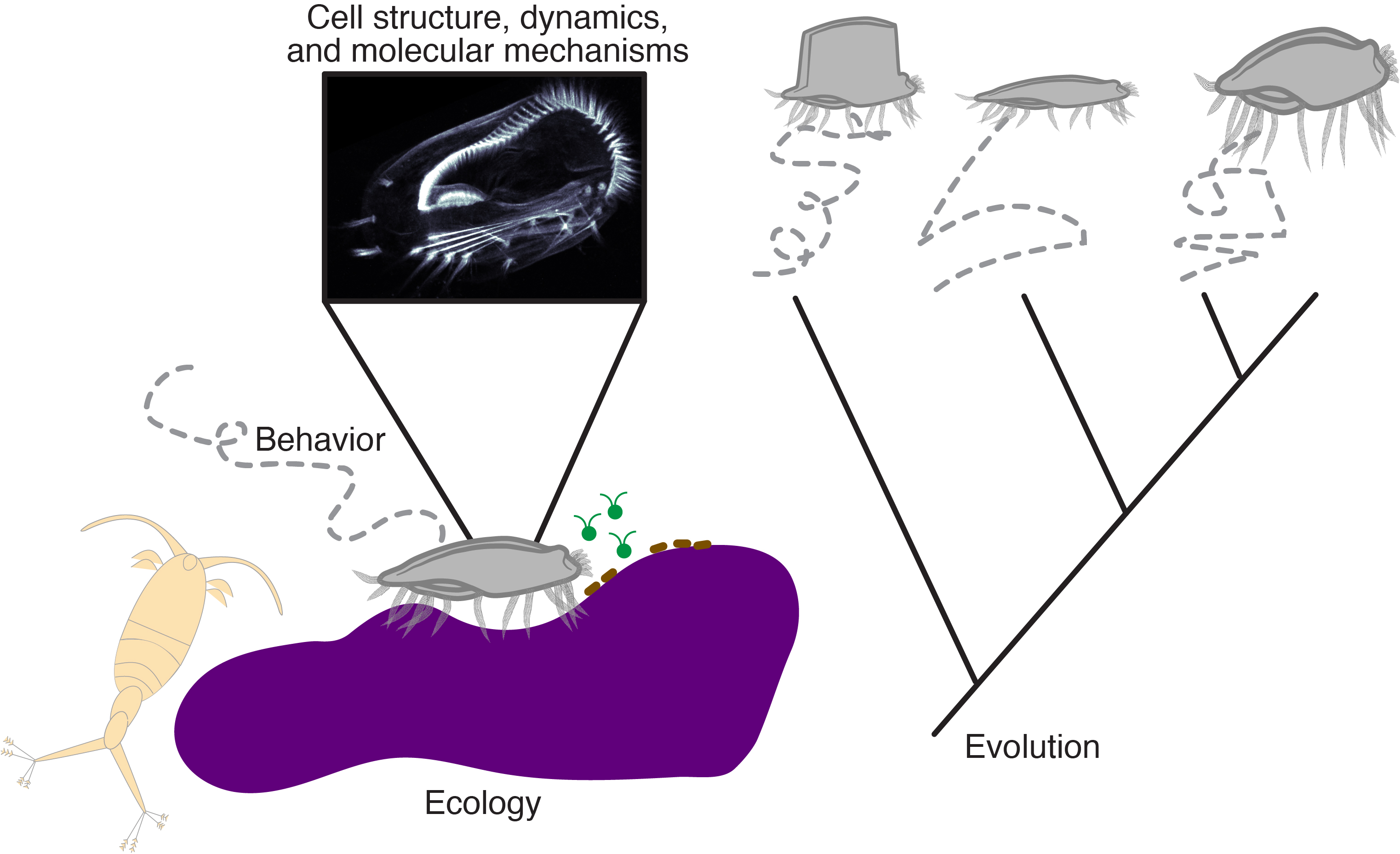
How is sensorimotor activity organized across space, time, and environmental contexts?

What are the mechanisms of coordination and decision making?
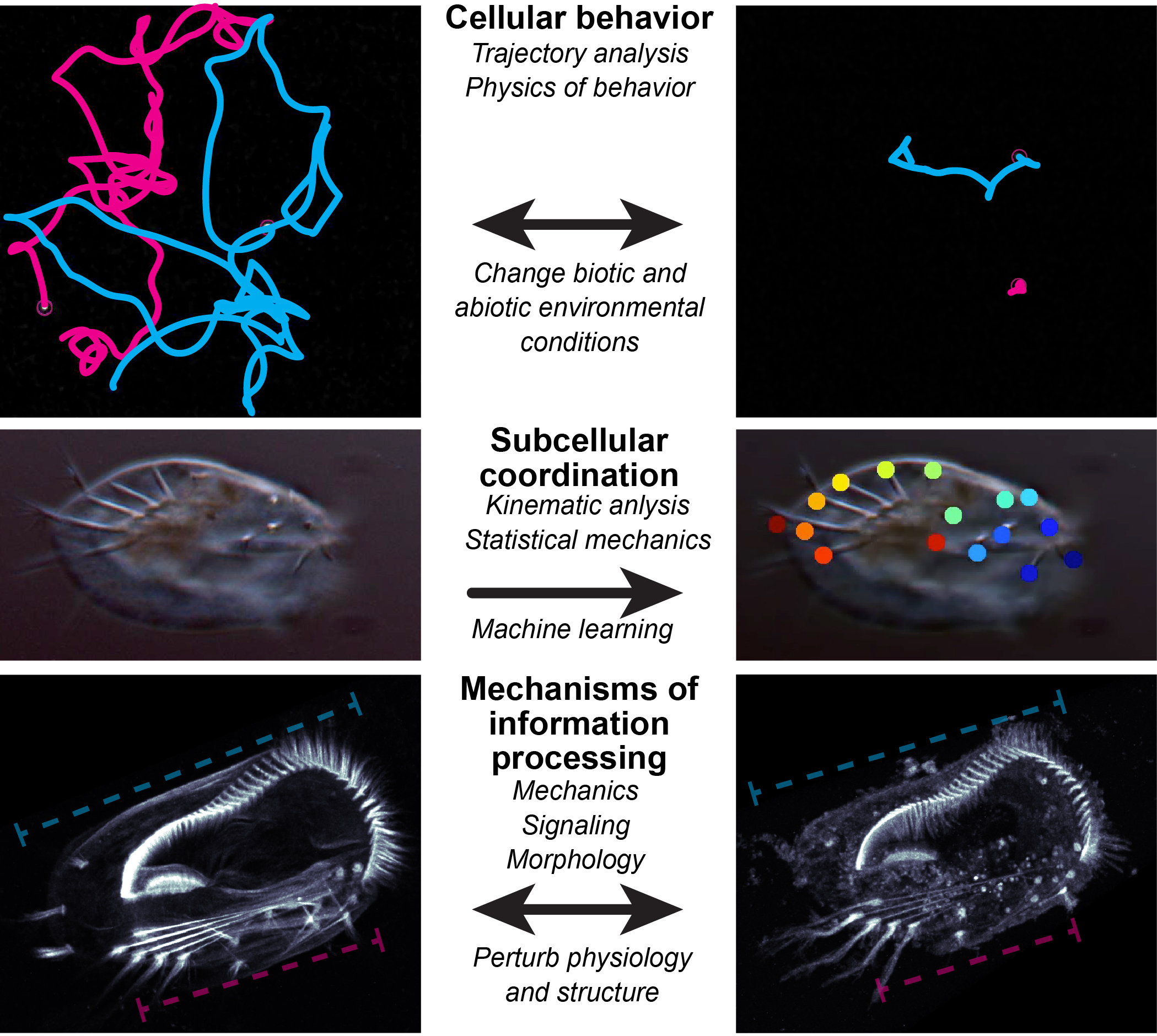
In individual cells, behaviors emerge directly from the joint action of chemical reactions, cellular architecture, and physical mechanisms and constraints within the cell and in its local environment. Understanding cellular behavior, therefore, requires integration across disciplines and scales of biological organization. As we are accumulating increasingly sophisticated and detailed understanding of the molecular components of cells, it remains stubbornly challenging to translate this knowledge into understanding of how cells work. Our lab uses experiments and theory to quantitatively investigate cell structure and dynamics to get at mechanistic principles of behavioral control: How do cells control complex behaviors?
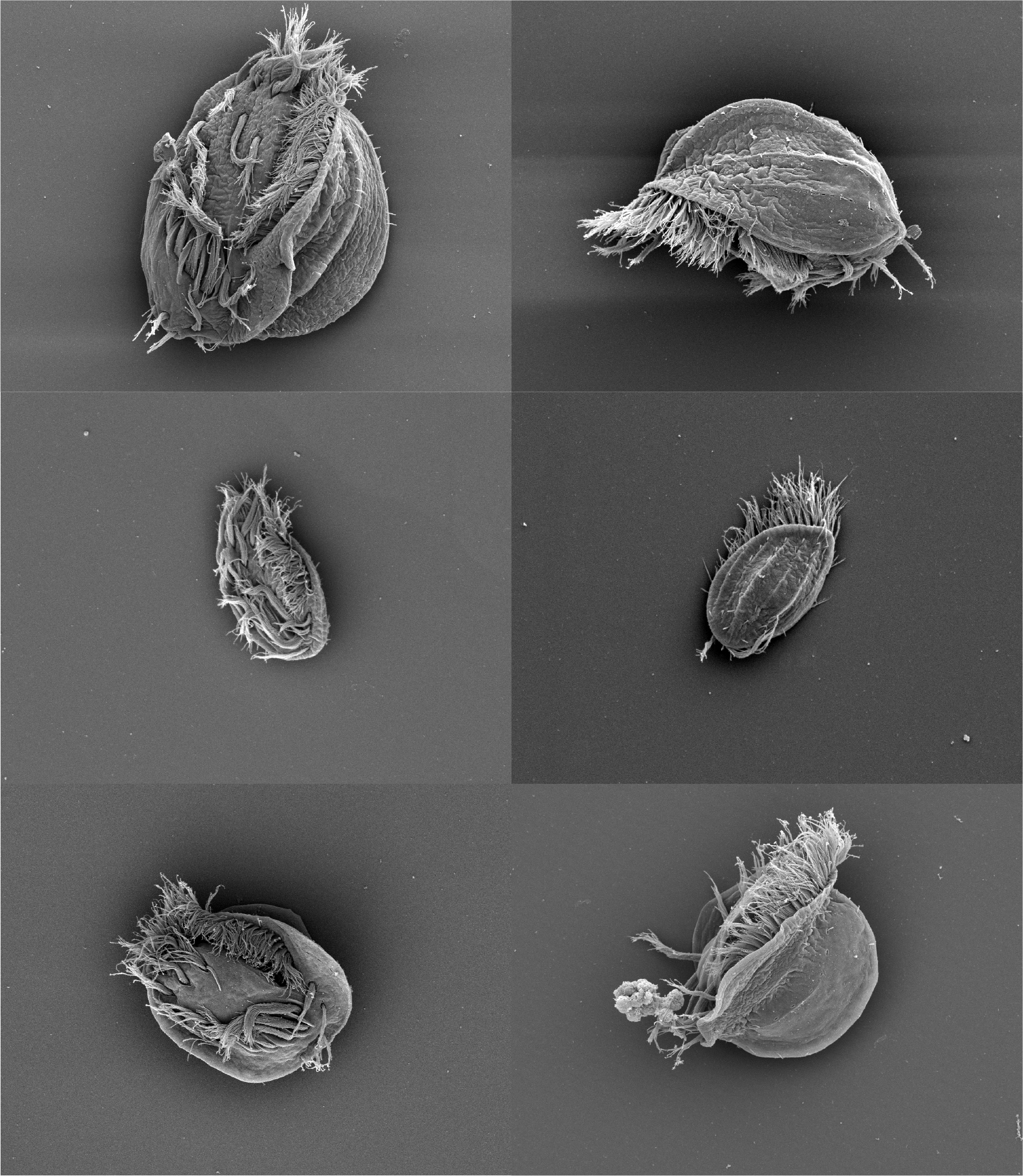
Currently, our efforts are focused on how Euplotes coordinates its leg-like ciliary appendages (cirri) during walking motility. The animal-like body plan of Euplotes, its multifaceted behavioral repertoire, and its large size together make these cells ideal candidates for rigorous experimental study. The diverse motile behaviors of Euplotes arise from differential control of cirri, so we aim to determine the mechanistic basis of cirral coordination. What drives decision making? Where and how is relevant information encoded? What is the role of physical constraints? Euplotes motility involves deeply conserved eukaryotic cell components, so mechanistic insights here may generalize to other cells, highlighting aspects that may be obscured by multicellularity or evolutionary history in other better-studied eukaryotes. Building on prior work, our goal is to arrive at an integrative perspective on mechanisms of cellular behavior, linking cellular structure, dynamics, and decision making to understand how behavior is regulated across spatiotemporal scales of biological organization.

How does cellular behavior evolve?

Principles of multicellular morphogenesis
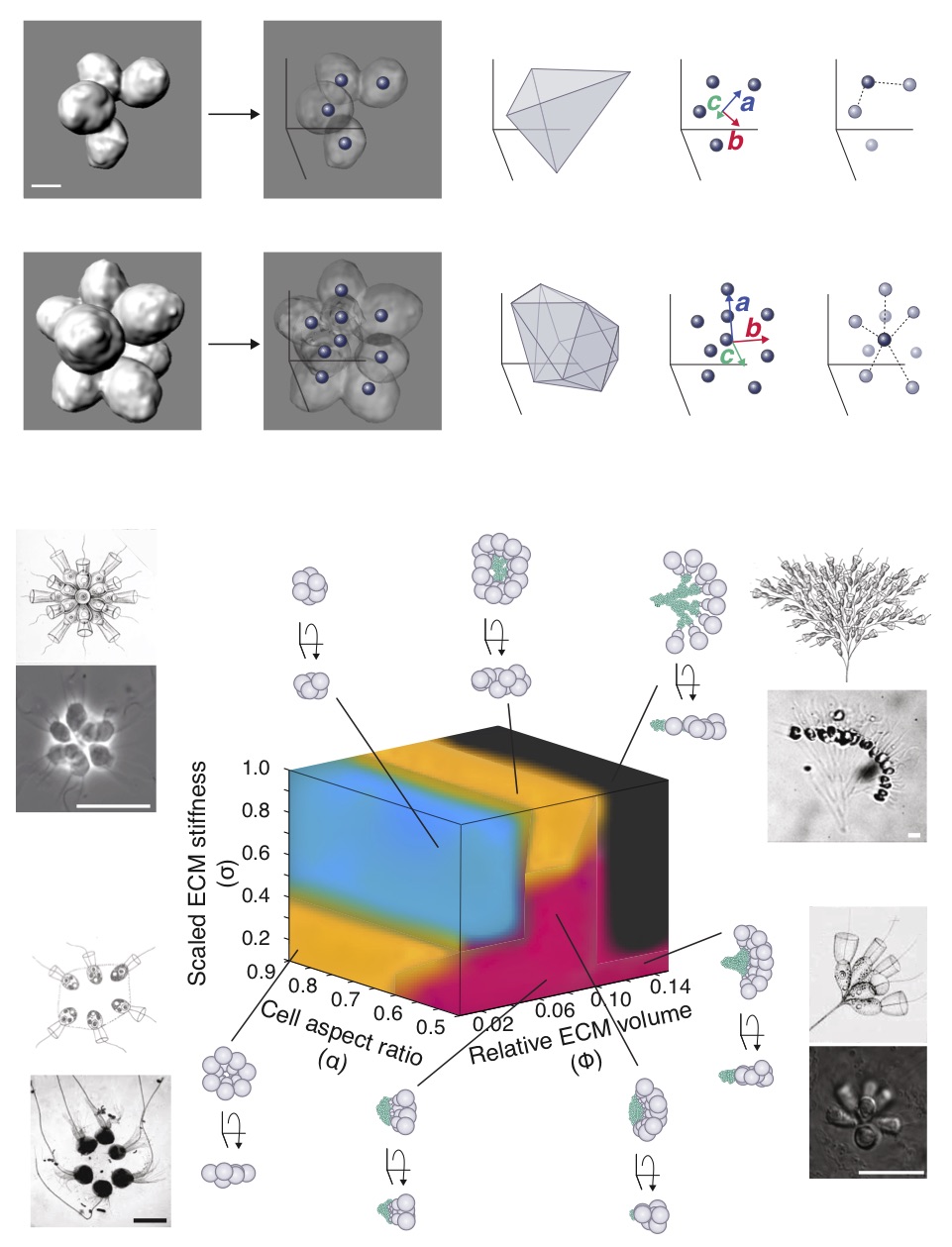
Many organisms possess the remarkable capacity to reproducibly develop into 3D structures starting from a single cell. We seek to understand both the mechanisms by which multicellular morphogenesis is accomplished and how such capacities evolve. In particular, we study how the regulated interplay between active cellular processes and physical constraints gives rise to the robust generation of form.
Various species of choanoflagellates, the closest living relatives of animals, can form multicellular colonies with different shapes, sizes, and behaviors. By comparing and contrasting the biology of choanoflagellates (and other protistan relatives) with that of animals, we are beginning to learn more about the evolutionary origins of animal multicellularity, including the evolutionary origins of developmental morphogenesis. Past work highlighted the role of the interplay between cellular behavior and physical constraints in giving rise to reproducible morphogenetic processes. While that work focused primarily on a couple of species of choanoflagellates, our interests extend broadly to principles of morphogenesis. Our ongoing and future work aims to take comparative approaches, combining theory and experiments, to uncover principles of the regulation and evolution of morphogenesis.

Natural history of protists
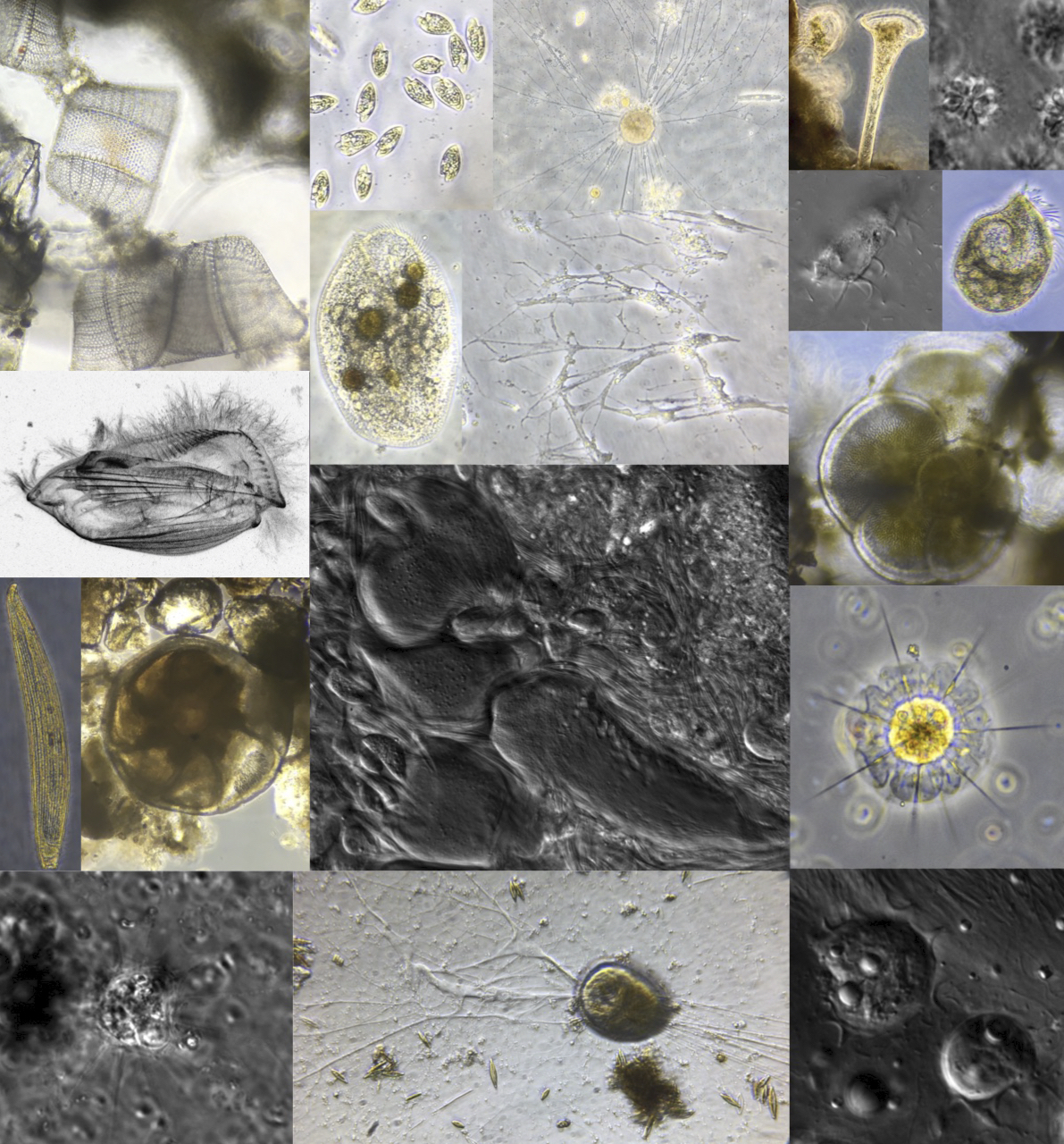
Much of the diversity of protists remains completely uncharacterized. Just about any field sample might contain a cell that could lead to important insights into fundamental biological questions. Although genomic and transcriptomic approaches can provide an important window on microbes in the environment, there is no substitute for the relatively slow approaches of careful observation and cultivation of cells, particularly when it comes to protists where cellular structure and function are difficult if not impossible to infer from a genome or transcriptome alone.
Our specific research questions may evolve, but we are always on the lookout for fascinating critters and the new questions they might inspire. In fact, many current research directions have been influenced by observations or discoveries made in the field. Furthermore, an appreciation for the natural context of biological function and what Barbara McClintock referred to as a "feeling for the organism" developed through close and careful observation are key factors in hypothesis generation and experimental design.